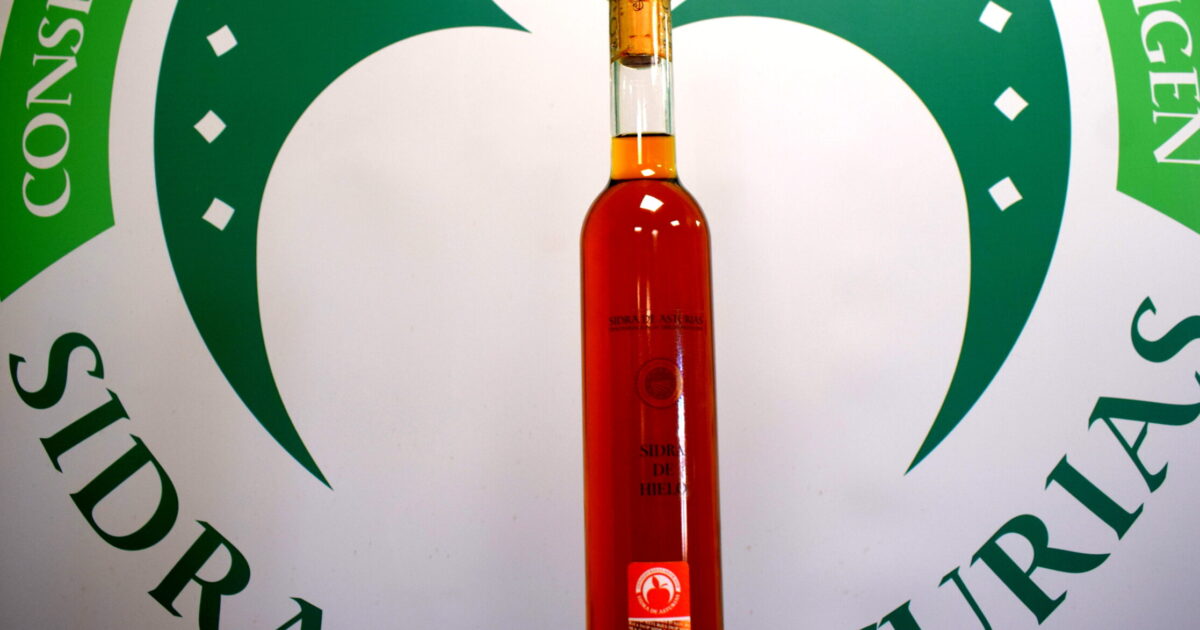
The Regulatory Council unveiled a vertical label in amber and copper tones measuring 24 × 36 millimetres in Villaviciosa. The first certified ice ciders could be available in June or July 2027.
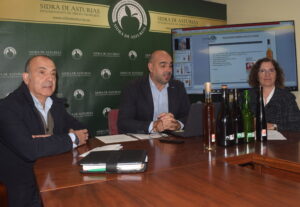 LA SIDRA. Asturian ice cider now has its own label under the Sidra d’Asturies Protected Designation of Origin (PDO). The Regulatory Council unveiled the label on Thursday, 5 November, at its headquarters in the San Xuan de Capistrano building in Villaviciosa. At the event, Council president Jorge García, general manager Daniel Ruiz and SERIDA director María del Carmen Oliván welcomed the addition of the new category to the product specification in just ten months, a timeframe they described as a record.
The new label is slightly smaller than the other PDO labels. Its vertical format measures 24 × 36 millimetres and is designed to fit ice cider bottles. It follows the same visual style as the other PDO labels, with a coppery amber tone that echoes the colour of the cider in the glass. The label will appear on ice ciders that pass the Regulatory Council’s certification checks.
García, Ruiz and Oliván agreed that the new category could add value to Asturian apples, broaden the range offered by cider producers and open up opportunities in fine dining and specialist retail. Jorge García summed up how ice cider fits into the designation: “It doesn’t compete with the other Sidra d’Asturies PDO products. It strengthens them.”
All three highlighted the cooperation of the cider industry, the work of the Regulatory Council’s technical staff and the support of the Department of Rural Affairs and Agricultural Policy. SERIDA played an essential role. It characterised the product, assessed its physical and chemical properties and defined the sensory parameters needed to establish a tasting system with common criteria. Oliván noted that the team had been able to complete the work so quickly thanks to years of steady work by researchers studying cider and ice cider in particular.
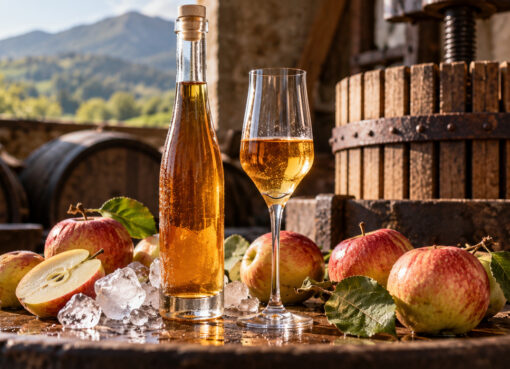
What makes ice cider distinctive starts with the freshly pressed apple juice. During freeze concentration, some of the water is removed as ice, concentrating the apple’s sugars, acids and aromatic compounds. This process gives the cider its characteristic balance of sweetness and acidity.
The department approved the amendment to the product specification in a resolution dated 14 October and published in Spain’s Official State Gazette on 26 October. The next step is to certify the first batches. According to Daniel Ruiz, the first bottles bearing the new label could be available in June or July 2027.