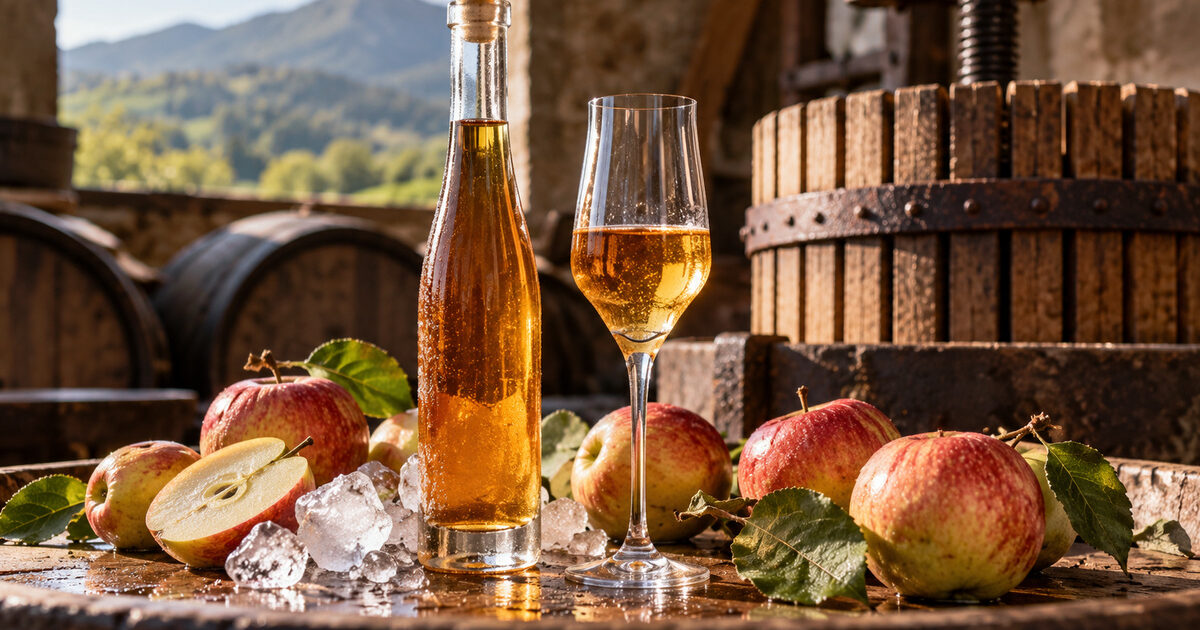
AI-generated illustration; it does not depict a specific commercial bottle.
The inclusion of ice cider within the Sidra de Asturias PDO recognises an innovative speciality and the Regulatory Council’s work to create new opportunities for Asturian cider producers.
Asturian cider has reached an important milestone: ice cider has been added to the range of products covered by the Sidra de Asturias Protected Designation of Origin (PDO). Announced on 16 October, this recognition marks an achievement for the Regulatory Council, which has been working to expand opportunities while maintaining the designation’s close connection with apples grown in Asturies.
The change opens a new pathway, but it does not mean that every ice cider currently on sale is already PDO-certified. Producers may decide whether to seek certification, and cider made from the 2026 harvest will be eligible for certification from 2027. The distinction matters: what has been recognised is the product category within the PDO’s framework.
Ice cider owes its distinctive character to its production method. Apple juice is concentrated by freezing, using a technique known as cryoconcentration to remove some of the water as ice. The process concentrates sugars, acids and aromatic compounds. In Asturies, virtually all producers use this method rather than freezing whole apples. Approximately four kilograms of apples are required for a 375 ml bottle.
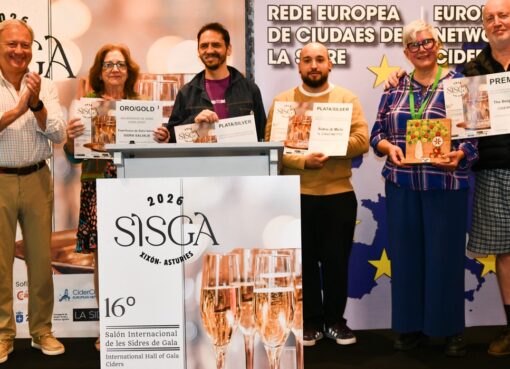
Production remains small-scale. According to the background document, around seven Asturian cider mills produce ice cider, with a combined output estimated at 50,000 bottles of 375 ml and typical retail prices between €15 and €35. This higher-value category has earned recognition in international cider competitions and among the SISGA award winners. Sidra Cortina’s Premium award at SISGA 2026 is a recent example.
In the glass, ice cider ranges from golden yellow to amber, with ripe-fruit aromas and a balance of sweetness and acidity. Total sugars exceed 100 grams per litre and its minimum alcoholic strength is 8% ABV. Its gastronomic potential extends to powerful cheeses such as Cabrales, pâtés, foie gras and desserts. Interest in the style was already apparent in sidra de hielo appearing on cider-house menus.
The Regulatory Council, bringing together growers and producers, has played a central role in this milestone. Its institutional work helps connect innovation with origin and quality standards. The inclusion of ice cider recognises the research undertaken by Asturian cider mills and offers an opportunity to add value to local apples, enter new markets and strengthen the future of Asturian cider culture.