The 2026 edition, dedicated to Cornwall, will bring together hundreds of artists from the Celtic territories from 31 July to 9 August. The Asturian delegation will celebrate forty years of institutional participation at an international showcase where music, heritage, gastronomy and cider form part of a shared Atlantic identity.
The Breton city of Lorient will once again become the leading meeting place for Celtic cultures this summer. The 55th edition of the Interceltic Festival will place Cornwall centre stage, with a programme featuring concerts, parades, instrumental competitions, dance, exhibitions, cinema and cultural outreach activities.
Each year, the festival brings together musicians, singers, dancers and artists from Brittany, Asturies, Galicia, Ireland, Scotland, Wales, Cornwall and the Isle of Man. They are joined by representatives of Celtic communities and diasporas from other continents, including Acadia and Australia.
This year’s edition will have a special significance for Asturies, which is marking four decades of institutional participation in Lorient. Since its first official appearance in 1986, the festival has become one of the foremost international showcases for the diversity of Asturian culture.
The 2026 delegation will comprise around 150 people and present more than fifteen projects related to traditional music, new sounds, dance, Asturian singing, cinema and the visual arts.
Participants will include Banda de Gaites El Gumial, Grupu Etnográficu L’Oriente-Llacín and groups such as Rubén Alba, Llevólu’l Sumiciu, Herbamora, Ferla Megía, Entós and Rellume, as well as renowned pipers such as Iñaki Sánchez Santianes. Asturian traditional singing will be represented by the winners of the second Obdulia Álvarez ‘La Busdonga’ National Asturian Singing Award.
The Asturian bagpipe will once again feature prominently in the MacCrimmon Trophy, while young Asturian performers will take part in the festival’s musical training and exchange programmes.
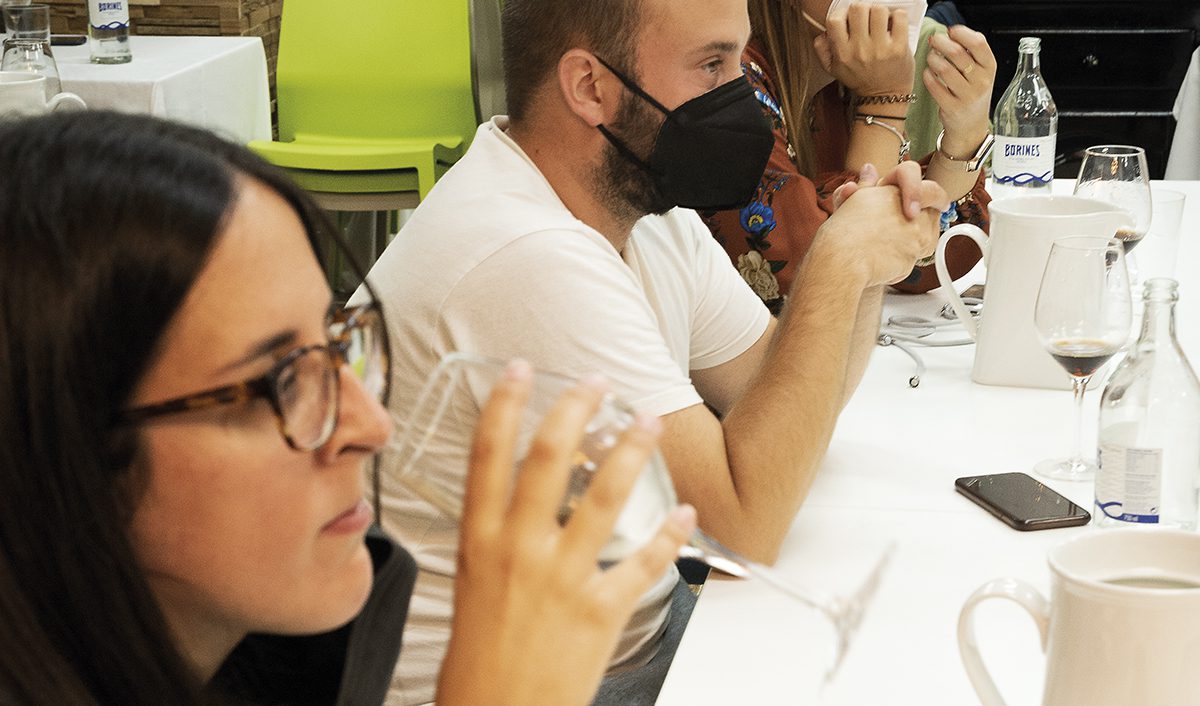
Although music and the performing arts are the main focus of the artistic programme, Asturias’s participation in Lorient also provides an opportunity to promote a much broader cultural identity. Cider culture holds an essential place within it, as one of the elements that best symbolises Asturies’s relationship with its territory, landscape, community and Atlantic traditions.
Asturian cider shares with traditional music the same ability to bring people together around collective practices. The cider mill, the espicha, the apple orchard, the bottle and the ritual of pouring cider all form part of a living heritage that enters into dialogue with the cultures represented in Lorient.
This relationship is especially meaningful at a festival that brings together territories with different Atlantic traditions. The event therefore offers a privileged setting in which to strengthen the international image of Asturies as a land of music, heritage and cider.
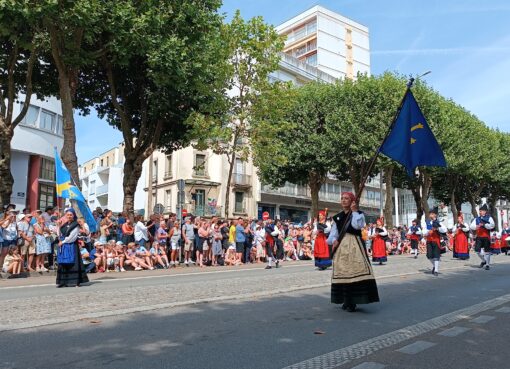
One of the central events will be the Great Parade of the Celtic Nations, scheduled for Sunday, 2 August. Pipe bands, dance groups and cultural delegations will parade through the streets of Lorient before thousands of spectators, with the event broadcast live.
The programme will also include the evening show Horizons Celtiques, the National Bagadoù Championship, competitions for bagpipe, harp, accordion and guitar, workshops, dance sessions and the traditional Breton festoù-noz.
Among the artists announced are Agnes Obel, Yann Tiersen, Eluveitie, Cécile Corbel, Dervish, Capercaillie, Kathryn Tickell, Susana Seivane, Carlos Núñez and Luar na Lubre.
Four decades after its first institutional participation, Asturies will return to Lorient with a diverse delegation combining tradition and contemporary creation. It will be another opportunity to promote internationally an Atlantic culture in which the bagpipe, song, dance and cider form part of a shared way of understanding the country.