Delfina Llera’s victory in Colunga and the results achieved by Cristina Álvarez and Haydee Prieto in Ribeseya put names to women’s work in homemade cider production.
LA SIDRA.— Homemade cider competitions introduce the public to products made in family cider mills, often with little visibility beyond their immediate surroundings. The results reported in the October magazine also offer an opportunity to recognise the women involved in this work.
Delfina Llera, Colunga’s champion
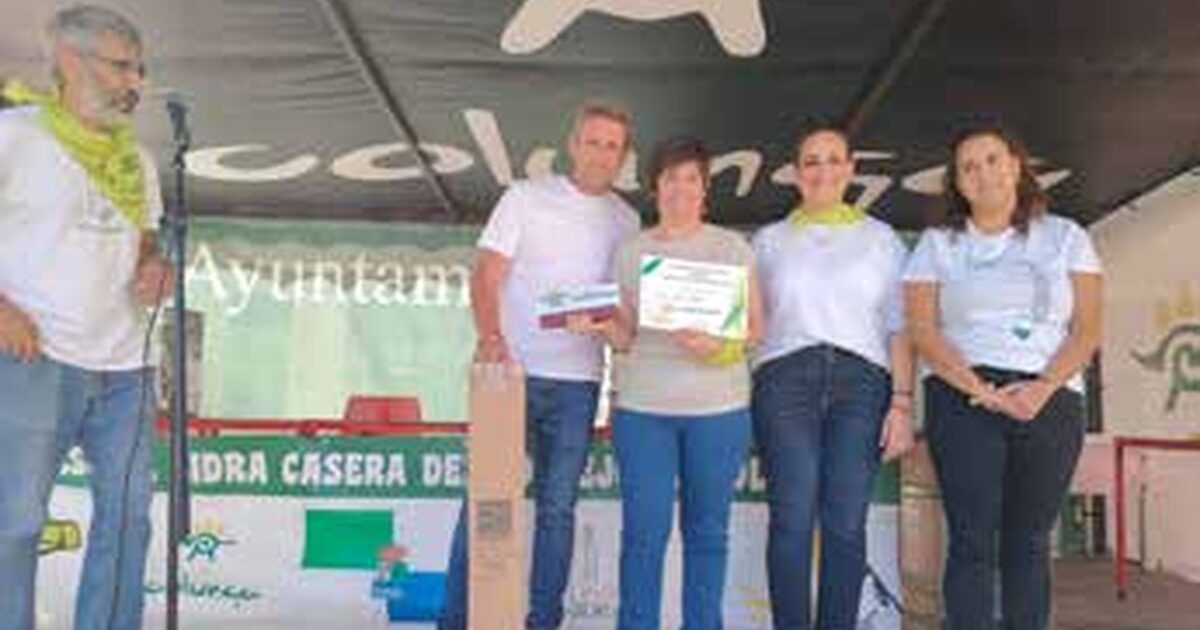
Delfina Llera Collado won the ninth Colunga Homemade Cider Competition, organised by the Comisión de Fiestes de Güerres. Judging and public tasting took place on 18 and 19 September in the Plaza del Monumento.
First prize included a trophy, certificate and a hundred-litre chestnut barrel. José Baldó finished second and Emilio Llera third. The top three qualified to represent the municipality in the Asturian Mundo Collada Awards, a network of competitions linking local production with recognition across Asturies.
Cristina Álvarez and Haydee Prieto in Ribeseya
Ribeseya’s Folixa la Sidre brought together 52 homemade ciders for its tenth competition. Cristina Álvarez, from Coya in Piloña, took second place in the overall ranking, behind Marcos Rodríguez from Salas. Isaac Argüelles, from Villaviciosa, completed the podium.
In the local cider category, Haydee Prieto, from Tezangos, finished second after a tie-break with the winner, Sebi González, who entered as “Pepe Luis” in tribute to his father-in-law. Iván el Municipal placed third.
The history of Ribeseya’s Folixa la Sidre demonstrates the importance of these gatherings for sharing cider, comparing results and strengthening connections between makers.
Recognising work and passing on memories
These results document women’s presence among the leading makers in two competitions. Naming the producers and giving their achievements visibility helps recognise work that is part of everyday life in family cider mills.
Cider culture is also passed on through family memories. Initiatives such as Sidrocoles encourage questions about who crushed the apples, which tools were used and what roles women played. These questions help build a fuller understanding of each cider mill’s history.
Keeping that knowledge alive is one of the challenges discussed in LA SIDRA 270’s editorial. Results and photographs from Colunga and Ribeseya appear on pages 58–59 and 62–63 of the October magazine.