 The Hungarian city of Pécs hosted on April 18 the first edition of Cider Salon Hungary, an event created as the Central European version of the renowned British Cider Salon.
Following the success of the London edition, held on May 24, the organizers embarked on a new venture in Hungary to showcase international ciders of a more continental character, often lesser known to wider audiences.
The Hungary Cider Salon took place at the historic Littke Pezsgőház, where producers, experts, and enthusiasts from across Europe gathered for a full day. The location is no coincidence, as beneath the city of Pécs lie 50 km of underground tunnels dating back to the Ottoman invasions (the oldest from 1527), where sparkling cider has been produced since 1859, with the most recent production in 2023.
The event positioned itself as a new reference space for cider culture in Central and Eastern Europe, combining tastings, educational sessions, and outreach activities around this traditional beverage, along with guided visits to orchards.
One of the most notable aspects of the event was its broad international representation. More than twenty producers presented their products, including nearly the entire Hungarian cider scene, as well as makers from countries such as Slovakia, Croatia, Serbia, Bosnia, Moldova, Austria, Germany, Italy, Sweden, Norway, France, England, and, of course, Asturias.
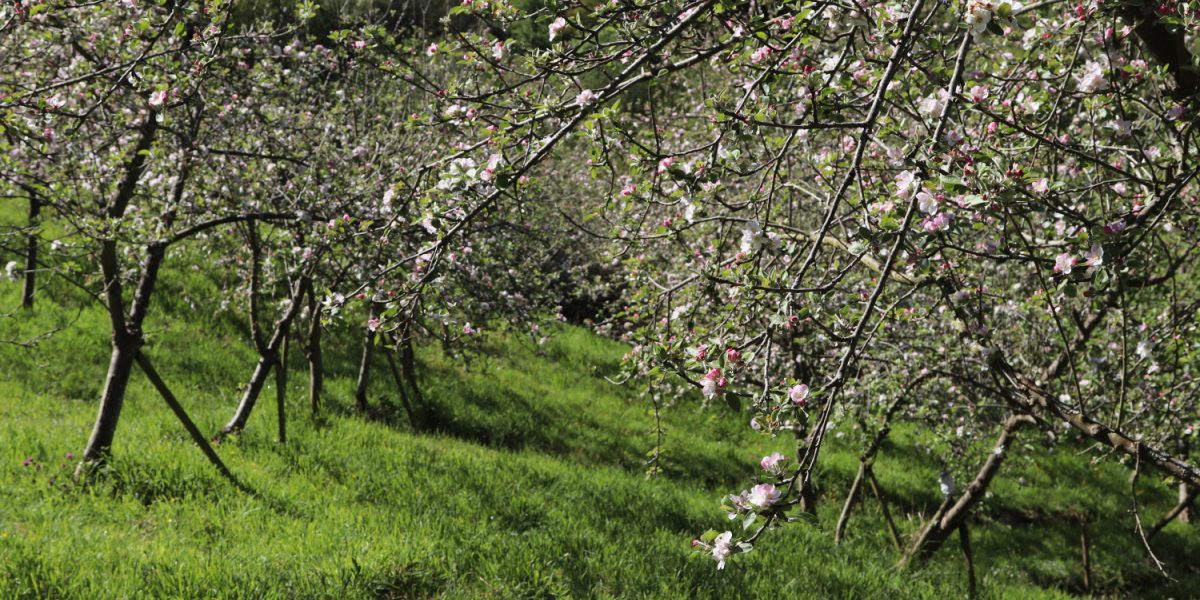
The Hungarian public had the opportunity to taste around 60 international ciders while listening to explanations from the producers themselves, engaging with industry professionals, and learning firsthand about production processes, orchard characteristics, the concept of the pumarada (traditional cider orchard), and the stories behind each cider and each country’s unique cider culture.
The ciders presented were consistently high in quality, yet showed a wide variety of styles, flavors, and techniques. Sparkling ciders stood out over still ciders, with a predominance of dry profiles over acidic or sweet ones.
The salon format was designed to encourage direct interaction between visitors and producers, as well as constructive feedback on the different products, whether cider, perry, or cider brandy (known as pálinka in Hungarian). In addition, each visitor received an exclusive event glass, specially designed for tasting and kept as a souvenir.
In this first edition, the Asturian presence played a prominent role. The Fundación Asturies XXI had its own stand, reinforcing its work in promoting Asturian cider culture internationally.
Likewise, Revista LA SIDRA attracted considerable interest among attendees thanks to its traditional cider pouring (escanciado) demonstration, which captured the attention of the Central European audience.
Beyond its public outreach efforts, the Asturian delegation was also interviewed for a Hungarian documentary on cider, highlighting the Salón Internacional de les Sidres de Gala and the growing success and international projection of the Red Europea de Ciudades de la Sidra network.
The organizers emphasized that the goal of Cider Salon Hungary is to establish a new meeting point for the sector, give visibility to emerging producers, and strengthen ties between traditional cider regions and new producing territories, maintaining an open mind about what can be achieved with both still and sparkling cider without losing quality or identity.
With this initiative, Hungary has joined the international map of major cider events, in a gathering that aims to grow in the coming years and become a key reference within the European calendar. It may even be introduced to the Asturian public in a future edition of SISGA in Xixón.
Cheers / Egészségére!